How I built Dantiva and AONETHA: one sentence in, a video out, and the first paying customers
Dantiva turns one sentence into a video, an image or a text, with Veo and Nano Banana inside. Dantiva serves the Russian-speaking market through the web, a Telegram bot and a mini app; AONETHA is the international version with Stripe. First purchase on September 17, first subscription on September 21.
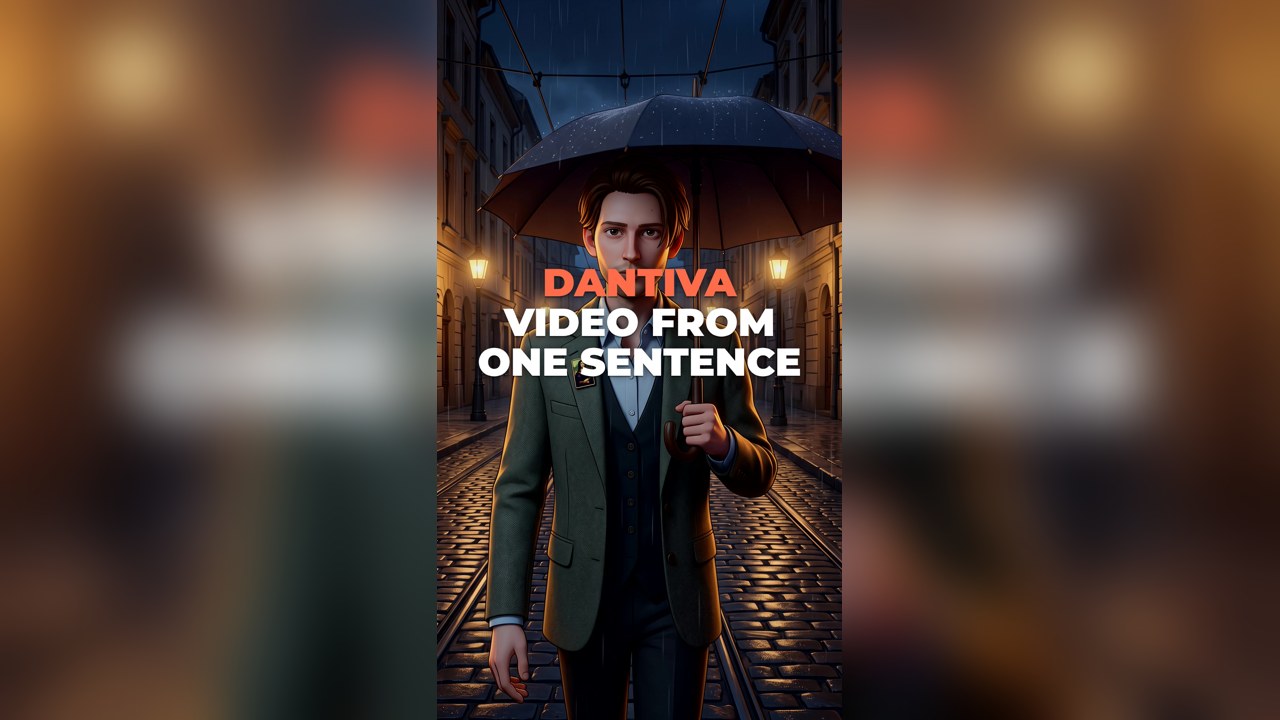
I built Dantiva and launched it. It already has paying customers and a monthly subscriber, and it now also has an international twin, AONETHA, with card payments. This is a short case study about how the product is put together, what the first payments looked like, and how the two versions split the work. The 3D video below was made in Dantiva itself.
What the product does
You type one sentence and get a video, an image or a text back. That is the whole interface. There is no separate product for each format: the same prompt field handles all three, and the result comes back in the same place where you typed it.
What is inside
Video generation runs on Veo from Google. Images run on Nano Banana. On top of the models sits my own layer: the account, the balance, the entry points and the delivery of results back to the user. Dantiva and AONETHA share this engine.
Two versions, two markets
Dantiva at dantiva.com is the Russian-speaking version. It works on the website, in a Telegram bot and in a Telegram mini app, and one account covers all three, so the balance is the same wherever you open it. Payment is in Telegram Stars and rubles.
AONETHA at aonetha.com is the international version. It is a web product, and payment goes through Stripe in dollars, euros and pounds, by card. The Telegram entry points and ruble payments stay on the Dantiva side; AONETHA keeps the same generation engine without them.
The first payments
The first one-time purchase came in on September 17. Four days later, on September 21, the first monthly subscription arrived. So the service now has its first paying customers and its first subscriber. I am not going to put a number on it, because the number is small and the point is different: the product went from an idea to something a stranger pays for.
How this video was made
The 47 second 3D video at the top of this post was made in Dantiva itself.
Where to look
The international version is at aonetha.com, the Russian-speaking one at dantiva.com. The story of the first customer and the September product update is in the earlier post on this blog, and the case study is in the portfolio on this site. If you want to try it, write to me on LinkedIn and I will add some free generations to your account.
FAQ
What is Dantiva?
A service that turns one sentence into a video, an image or a text. It runs on the website, in a Telegram bot and in a Telegram mini app, with one account across all three, and accepts Telegram Stars and rubles.
What is AONETHA?
The international version of the same product at aonetha.com: a web service with the same generation engine and payments through Stripe in dollars, euros and pounds.
What models are inside?
Veo from Google for video and Nano Banana for images.
Does the product have paying customers?
Yes. The first one-time purchase came in on September 17, 2026, and the first monthly subscription on September 21, 2026.
How can I pay?
In Dantiva, with Telegram Stars or rubles. In AONETHA, by card through Stripe in dollars, euros or pounds.
Keep reading
All articlesA tiny world with no rewards. What minimir is testing, and why a first null result still counts
minimir is an artificial life experiment: simple creatures, tiny neural networks, no rewards. It asks whether wanting appears when a creature can sense itself. The first measurement shows a signal lost in noise. What that means and what comes next.
ReadA city where nothing hurries you. Zagreb Pomalo
A browser game about the real centre of Zagreb. A day lasts 48 minutes, a hostel bunk is 18 euros a night, a room of your own is 450, and that arithmetic is the plot.
ReadMy Lovable site looked finished. Google could read one language out of four
What the first Lovable version of a robot catalog got right, what Google could not read, and the three checks to run before you launch a site that lives on search.
Read