I put my own face on the front page. How I launched Likeness House
Likeness House turns a person's own stories into a private archive the family can ask questions, answered in that person's voice. The site went live on 9 October 2026 with a portrait of light that follows the cursor. The first portrait is mine.
On 8 October Likeness House was a plan in a document. On 9 October it had a name, a domain, a site in English and Russian, a client account and an admin panel. This note covers what the product is, why the first portrait is my own, and how the site is put together.
What Likeness House does
Some stories only get told out loud: how you decided to start a business, what changed your mind at the hardest moment, the family story your children keep asking for. Likeness House records them.
We spend ten to twelve hours in interviews, write the stories up, and the person approves each one before it is used. From the approved stories we build a private archive. The family asks it questions and hears the answers in the person's own voice.
It is not a copy of anyone's mind. The system answers only from approved stories, shows where each answer comes from, and says so when the archive has nothing on the question. The original recordings stay apart from anything the AI generates.
Why the first portrait is mine
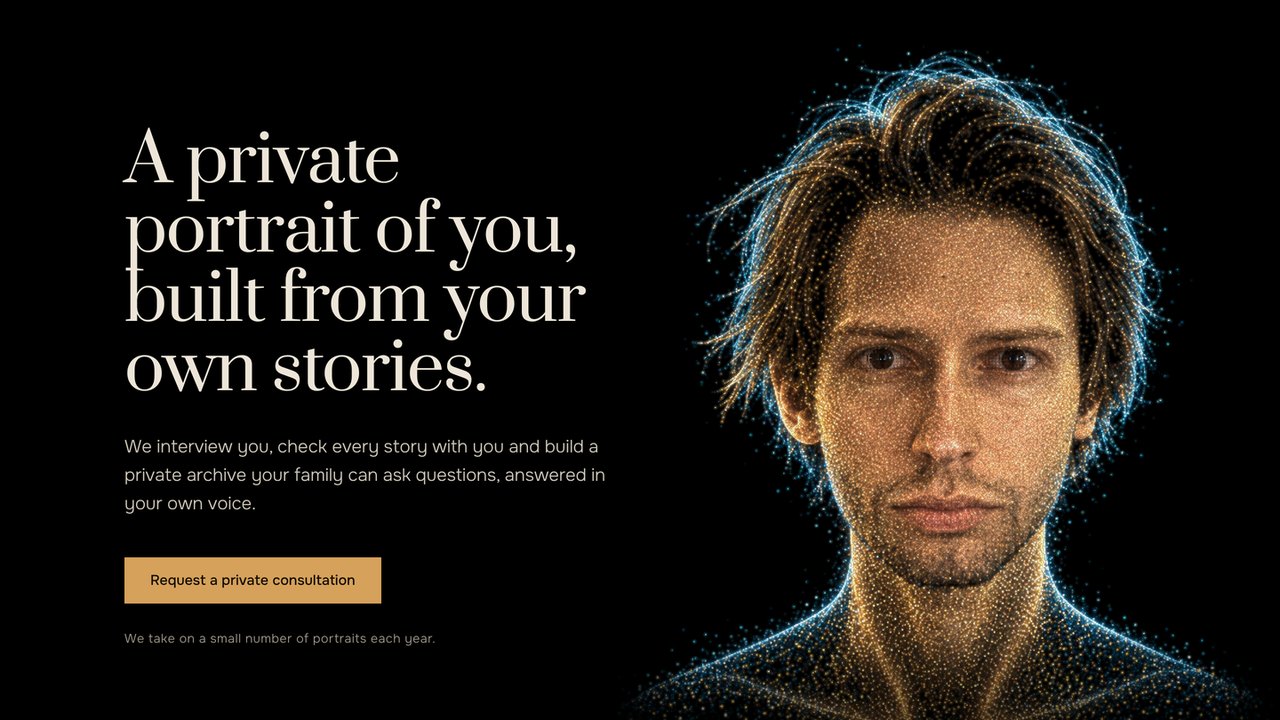
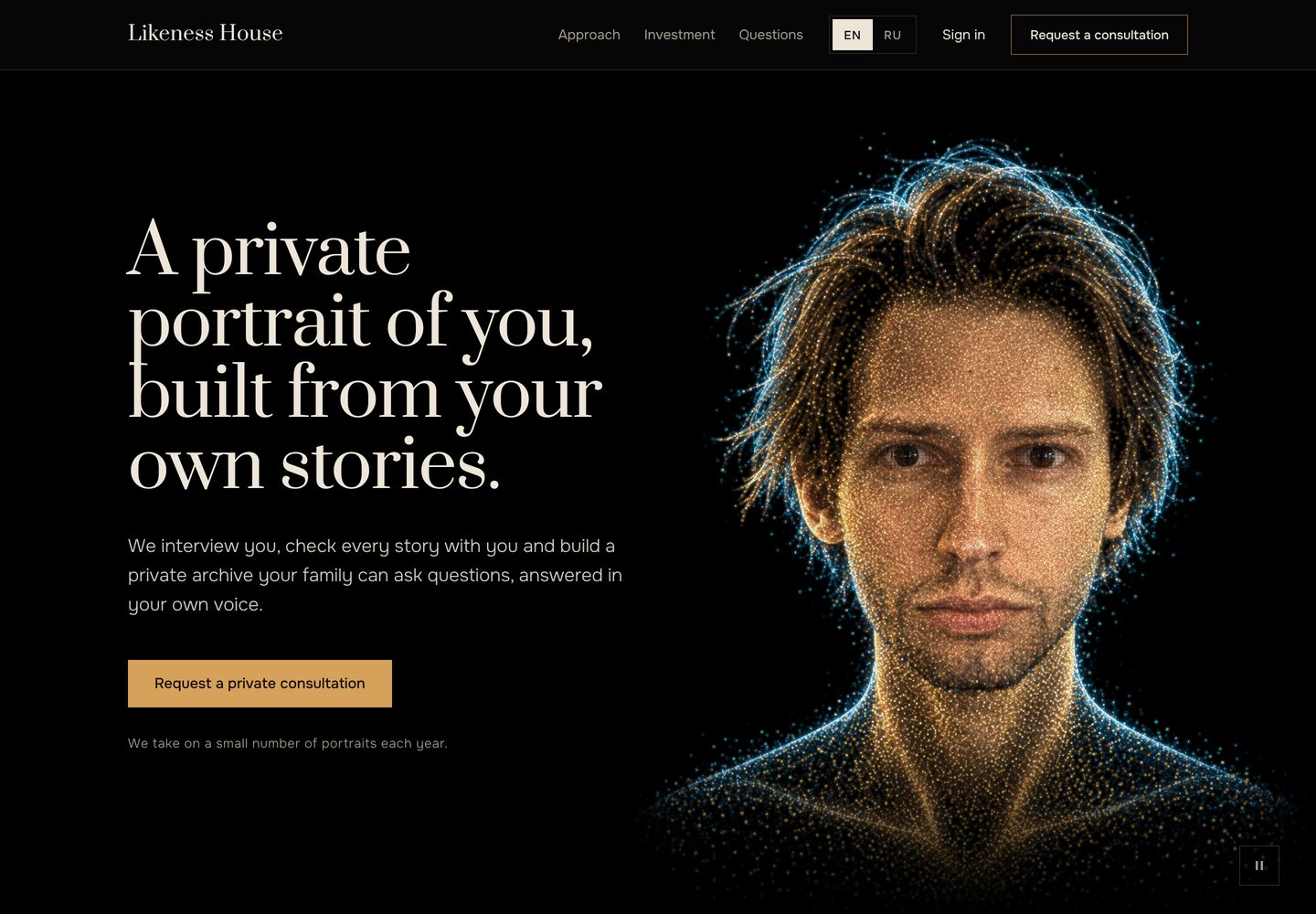
A product like this is hard to explain with a mockup, so I went first. The face on the home page is mine, made of points of light. My stories and my voice went into my own archive before anyone else's.
If I ask someone to trust me with their stories, I should be able to show what I did with mine.
A portrait that looks back
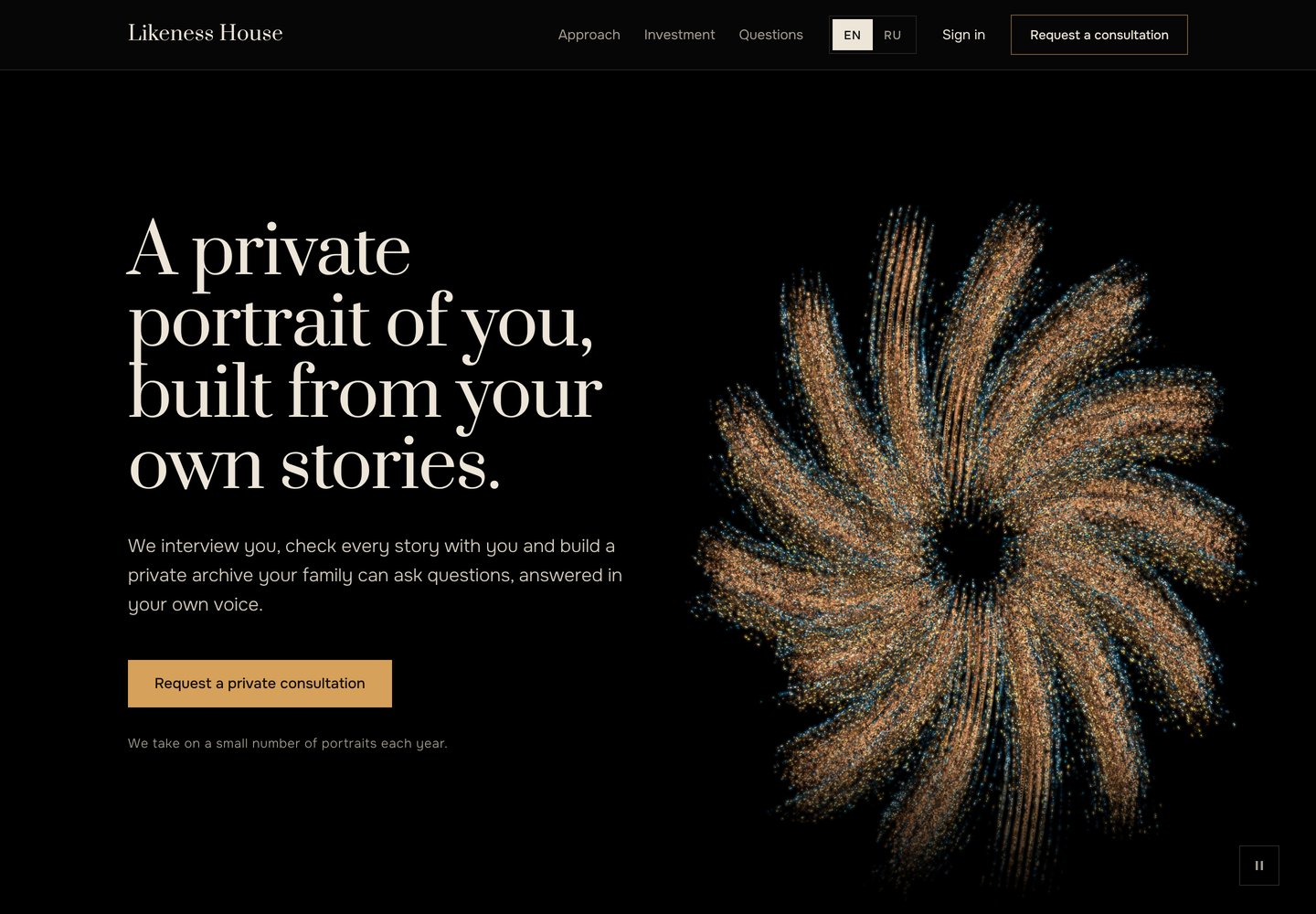
The portrait is not a video. It is a 2.5D relief of my face drawn as thousands of points in WebGL. It gathers when the page opens, blinks, breathes and follows the cursor. The eyes move on their own, and the head turns a little on the neck, the way a person turns toward a voice. A few seconds after the cursor stops, it looks straight ahead again.
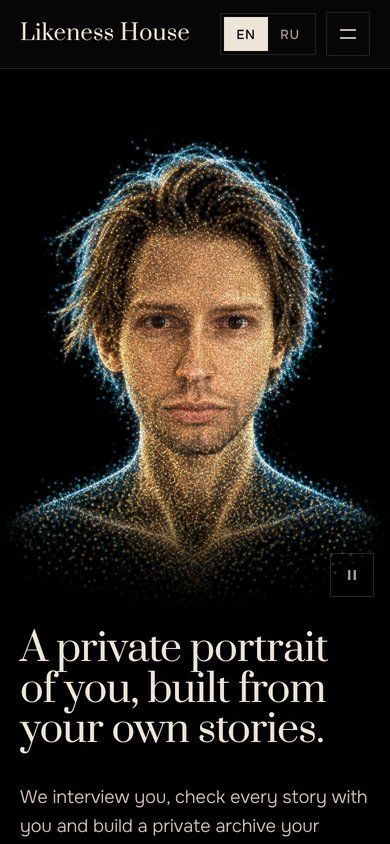
On a phone there is no cursor, so the portrait drifts slowly by itself. There is a pause button, and the animation stops when it scrolls out of view, so it doesn't drain the battery.
The engine started in Pulsara, my voice assistant, and grew into a desktop portrait for this project. For the web I tuned the point density, warmed the colours and made it light enough to run on a phone.
What the client sees
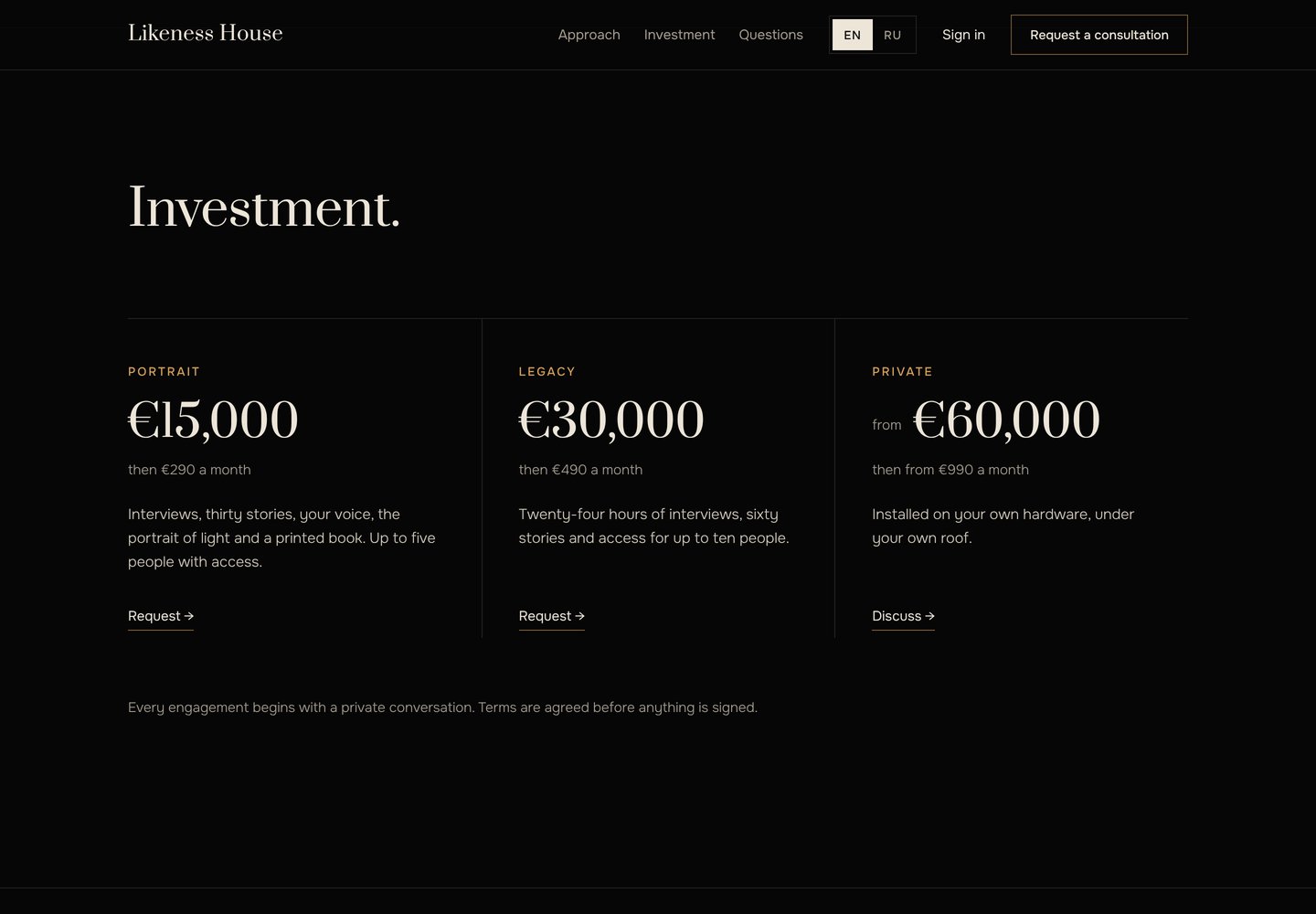
Three packages, with prices on the site:
- Portrait: €15,000, then €290 a month. Interviews, thirty stories, the voice, the portrait of light and a printed book.
- Legacy: €30,000, then €490 a month. Twenty-four hours of interviews, sixty stories, access for up to ten people.
- Private: from €60,000, then from €990 a month. Installed on the client's own hardware.
The prices are public. A client should know the number before the first call.
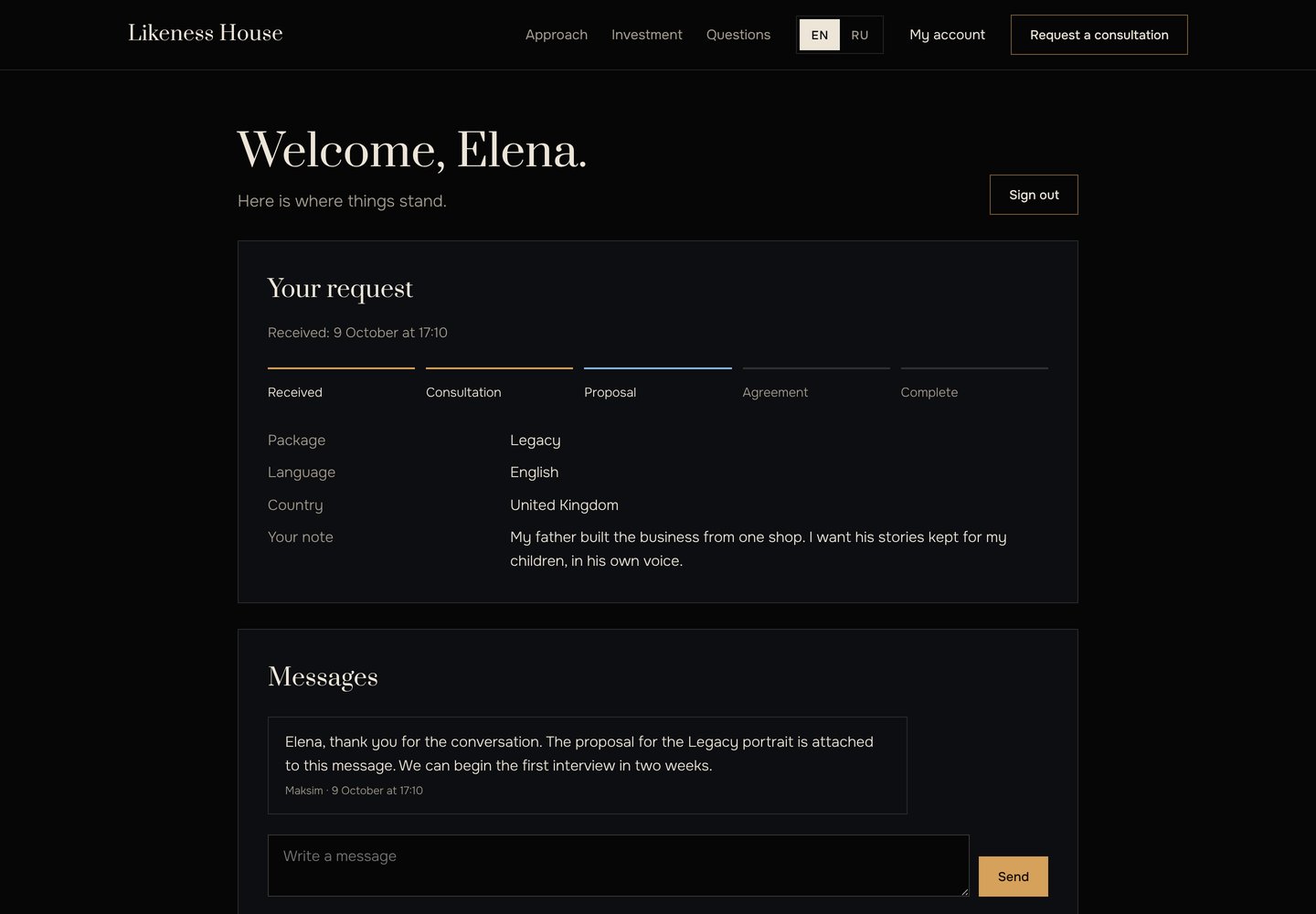
A request needs no registration. After it, the client can open a private account and follow the status: received, consultation, proposal, agreement, complete. Messages to me go from the same page.
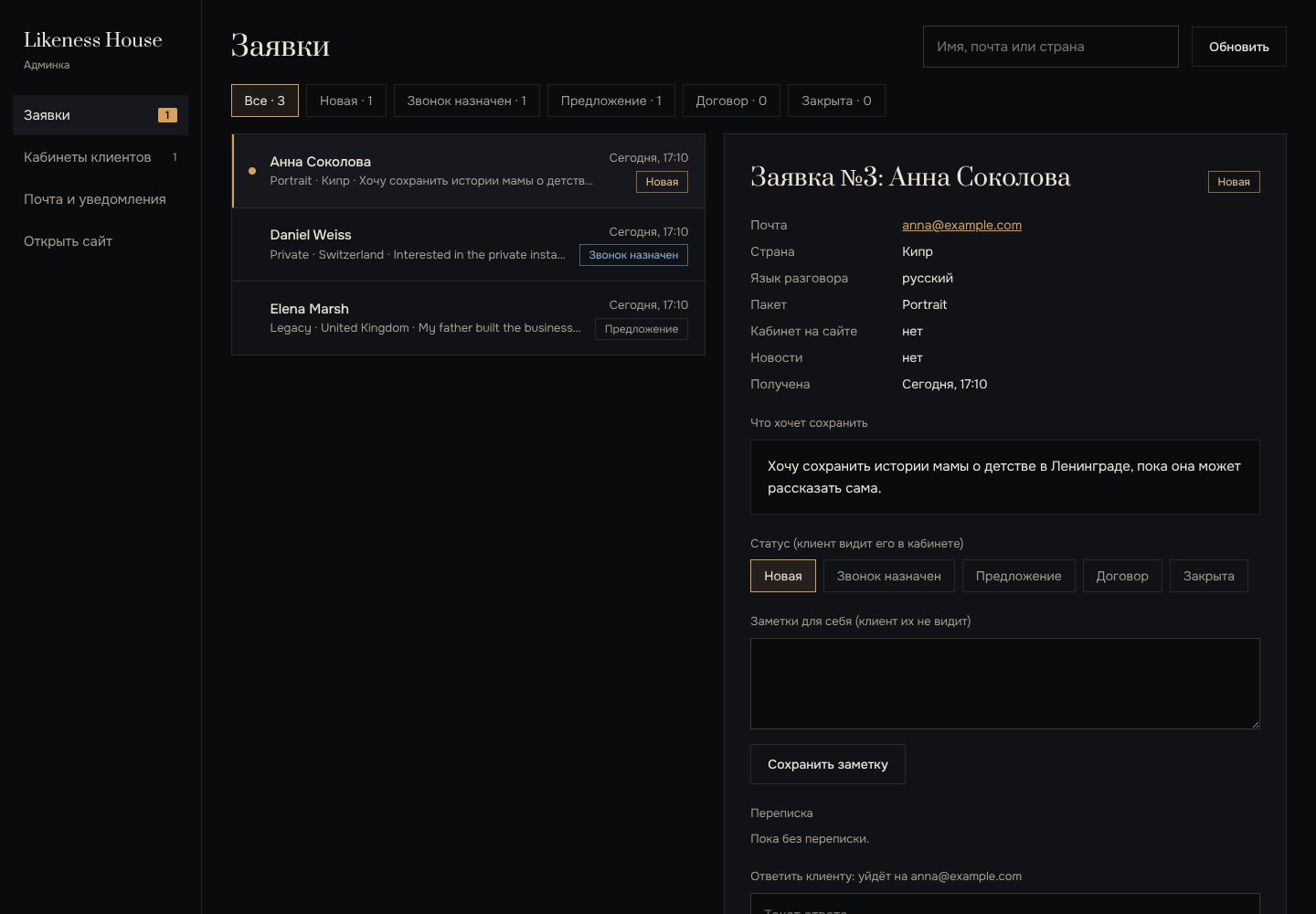
Behind it sits an admin panel in Russian. I see every request there, change its status, keep notes the client never sees, and reply. The reply shows up in the client's account.
How it is built
No framework and no dependencies. A small Node.js server renders both languages on the server, so search engines read the English and the Russian pages in full. I learned that lesson on a robot catalog where Google could read one language out of four.
Passwords are hashed with scrypt, sessions live in HttpOnly cookies, and forms are checked for origin, rate-limited and carry a trap for bots. The site runs on Railway with a persistent volume, at likenesshouse.com. A shared link shows a large preview banner in messengers.
The code was written with AI coding assistants under my direction and review: Codex built the portrait engine, Claude built the site.
What I held to
Every text went through a check for AI clichés. There are no placeholders, no coming-soon blocks and no testimonials, because there are no clients yet to quote. The buttons have sharp corners. The tone is quiet on purpose: we take on a small number of portraits each year, and the site says so in one line.
What comes next
The site is open for private consultations. Next come email and Telegram alerts for each request, and the first client interviews.
To see the portrait move, open likenesshouse.com on a computer and move your mouse.
FAQ about Likeness House
What is Likeness House?
A private portrait service. We record a person's stories in interviews, the person approves each one, and we build an archive the family can ask questions, answered in that person's voice, together with a living portrait of light.
How much does it cost?
Portrait is €15,000, then €290 a month. Legacy is €30,000, then €490 a month. Private starts from €60,000, then from €990 a month.
How long does it take?
Six to eight weeks from the first interview to handover.
Can it invent answers?
No. It answers only from approved stories and shows the source of each answer. When the archive has nothing on a question, it says so.
Is the portrait on the site a video?
No. It is a WebGL relief made of points of light that reacts to the cursor in real time.
Keep reading
All articlesHow I built Dantiva and AONETHA: one sentence in, a video out, and the first paying customers
Dantiva turns one sentence into a video, an image or a text, with Veo and Nano Banana inside. Dantiva serves the Russian-speaking market through the web, a Telegram bot and a mini app; AONETHA is the international version with Stripe. First purchase on September 17, first subscription on September 21.
ReadA tiny world with no rewards. What minimir is testing, and why a first null result still counts
minimir is an artificial life experiment: simple creatures, tiny neural networks, no rewards. It asks whether wanting appears when a creature can sense itself. The first measurement shows a signal lost in noise. What that means and what comes next.
ReadA city where nothing hurries you. Zagreb Pomalo
A browser game about the real centre of Zagreb. A day lasts 48 minutes, a hostel bunk is 18 euros a night, a room of your own is 450, and that arithmetic is the plot.
Read