Inside my @ilinmaksbot: project questions, an estimate and a brief
How I built @ilinmaksbot: project questions, an initial estimate and a brief sent to me in Telegram. A three-language portfolio and the limits of automation.
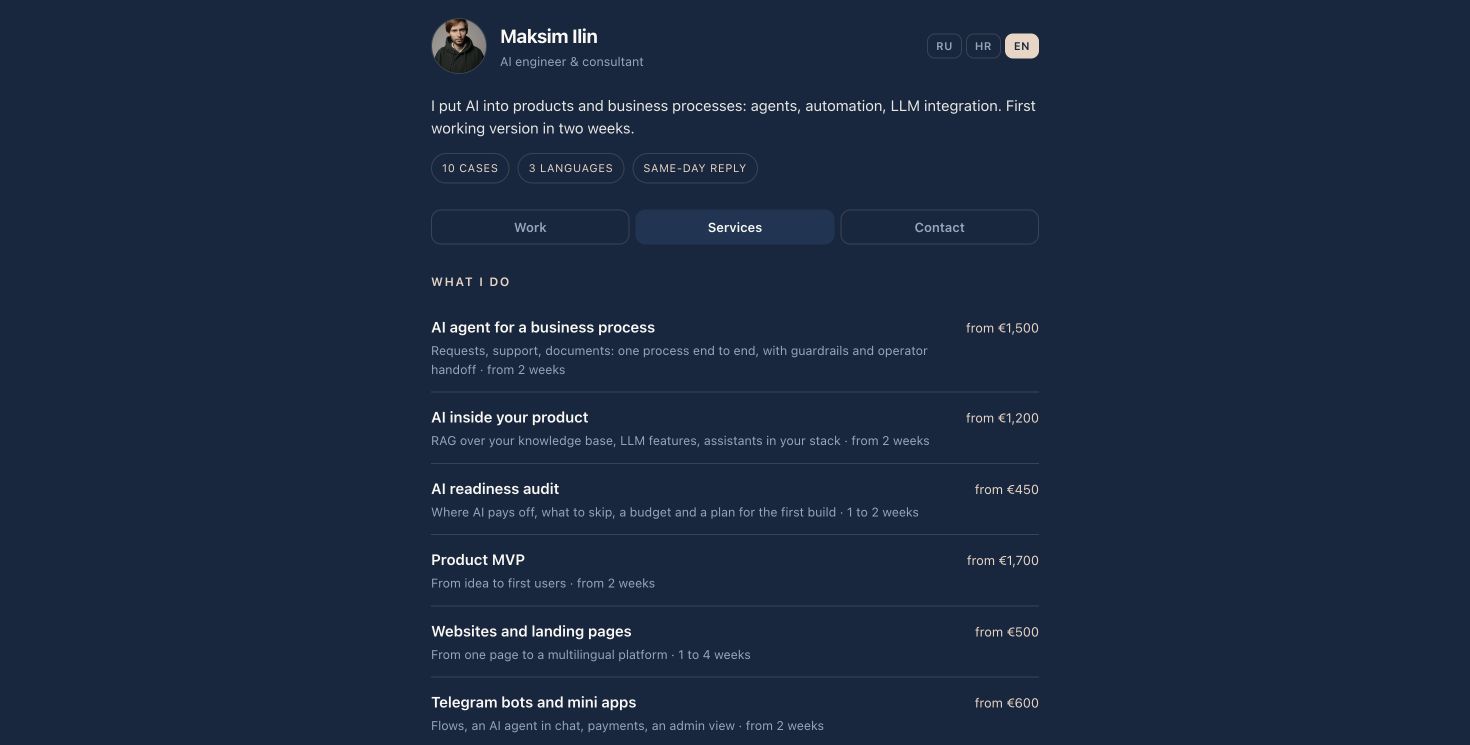
Visitors to my website can open @ilinmaksbot to get an initial idea of a project's scope. It asks what they need, how far along they are and what budget they have in mind. Then it returns a possible first version, a timeline and a price band. Anyone who wants to continue can write a short brief, which reaches me together with their answers.
This is my own bot for development enquiries. Here I explain its flow and the decisions that could apply to a similar business bot. The image above shows its services page, opened in a regular browser.
What someone needs before the first conversation
“I need a bot” leaves a lot unanswered. Should it collect enquiries or interpret free text? Is there a specification or just an idea? Will messages be enough, or does the task need several screens?
I moved the beginning of that conversation into the bot. The usual path has three questions with buttons. It doesn't ask for a phone number. People get an initial outline before deciding whether to send me their project.
The bot accepts enquiries about websites, Telegram products, AI automation and MVPs. The suggested scope changes with the project category and budget. I discuss the project details personally.
How the answers become a brief
After the project category, the bot asks about its stage: a finished specification, an idea or a problem without an obvious solution. Next come budget bands and an “I haven't worked it out yet” option. That option returns two possible scopes so the person has something to compare.
There's also an “I'm not sure yet” project category. In that branch, people describe the task straight after the stage question. Asking them to choose a budget before they know what they're commissioning feels premature. The bot looks for words that suggest a category and returns relevant starting points when it finds a match.
The estimate uses predefined rules. This part of the flow doesn't call a language model. A Telegram project and a particular budget band, for example, select a prepared description of a first version. An unusual integration or data requirement can change the estimate when I review the details.
“Send the brief to Maksim” asks for a short description. Once that arrives, the bot sends me the task, stage, budget, description and Telegram profile. The message includes the language and a source tag if one was supplied in the link. I take over the conversation with that context already available.
Why the bot has a portfolio interface
Messages work well for a few questions. Several project examples are easier to browse on a separate screen. The bot therefore has a small portfolio of work and services that opens inside Telegram as a Mini App and also works in a browser.
It has tabs for work, services and contact. Someone can start an estimate, open the portfolio, look at examples and return to their task. I explain the interface choice in Telegram bot or Mini App: what to build.
The bot and portfolio support Russian, English and Croatian. Telegram's language setting determines the bot's initial language, and people can switch it themselves.
A small service and a development project have separate paths
The bot includes Telegram Stars payments for an express audit and an idea-to-spec service. A confirmed payment notifies me, and the bot asks the buyer to send the project materials. I prepare the audit or document personally.
A website or bot build still needs its own scope and payment agreement. Buying a small review doesn't pay for the whole project. The interface needs to make that distinction clear at the point of purchase.
Storage and the limits of the flow
The bot runs on Node.js and calls the Telegram Bot API directly. It keeps the current conversation in memory and writes counters and recent enquiries to a file. I haven't connected a separate CRM for this small product.
That choice has limits. A restart can lose an unfinished conversation. The log keeps the last 50 enquiries, so it isn't a complete client history. A sales team needing durable conversations, statuses or delivery retries should include those requirements in its own scope.
Tagged links help distinguish sources of bot starts. Starts aren't unique people or orders, and a tag doesn't reveal what someone asked a search engine or AI assistant. To assess sales, I need to know what happened after the enquiry.
What this case demonstrates
@ilinmaksbot implements a path from a few answers to an initial estimate and a brief handed to a person. The portfolio gives people a way to browse work along the way. The case helps identify which steps your business needs and what information the person answering should receive.
I'm documenting my own product. I don't have verified conversion growth figures for this flow, so the result described here is what it does.
Commissioning a Telegram bot for your process
My Telegram bot development page covers the work, stages and starting price. A useful first message shows an example enquiry and explains who should receive it. CRM integration, payments or a long conversation that survives restarts all affect the scope.
You can explore the flow in @ilinmaksbot. To discuss a similar project, describe the task you need to handle. You don't need a finished specification to begin.
Related services
Keep reading
All articlesFelix: a Telegram bot and Mini App for event requests
How I built Felix for venue and equipment enquiries: guided questions, catalogue matching, indicative pricing and manager handoff across a Telegram bot and Mini App.
ReadHow I built Dantiva and AONETHA: one sentence in, a video out, and the first paying customers
Dantiva turns one sentence into a video, an image or a text, with Veo and Nano Banana inside. Dantiva serves the Russian-speaking market through the web, a Telegram bot and a mini app; AONETHA is the international version with Stripe. First purchase on September 17, first subscription on September 21.
ReadThe model is the easy part. What building Dantiva taught me
Build notes on Dantiva, an AI photo-to-video studio on Google's models: three front doors, a reserve and refund ledger, a rename I refused to finish, three pricing rounds, and the wall the product hit.
Read